




The tank waits.
Every token takes you deeper.
A little yellow submarine sinks while you code. Somewhere around 1,000 m the water goes black, and things start to glow.
day 58 · 1,519 m · the water is black now
It never interrupts. Once in a while it tells you something surfaced.
macOS 13 or later, Apple silicon. Reads Claude Code, Codex CLI, Cursor and Pi — all at once, into one depth.
the museum, live
Everything you found, in the water it lives in.
Hover the scene and press EXPLORE › to swim it with the arrow keys. Click any creature for its card.Tap any creature for its card. Scroll the window for the galleries.
1,000 MNEXT · 4,000 M
61 / 147SPECIES
58DIVE-DAYS
1,486 mDEEPEST FIND
2 / 8LANDMARKS
SURFACE GALLERY5 / 15
0–10 m
The tank waits.
The tank waits.
The tank waits.
MIDNIGHT ZONE GALLERY4 / 38
1,000–4,000 m

Undiscovered

Undiscovered
The tank waits.

Undiscovered
Depth, not numbers
1,519 m says more than 412,883,109 tokens. Depth never goes backwards, and it stops at 10,900 m — where the ocean does.
Days, not tokens
A daily cap means burning tokens buys nothing. Showing up is what takes you down. About a year of it reaches the bottom.
Species, not levels
147 real animals at their real depths, each with one fact worth reading. Everything not yet found waits as a silhouette.
the water column
Nine zones. 10,900 metres. About a year of showing up.
Depth accumulates day by day and never goes backwards. Each zone sets that day's ceiling, so progress gets gently harder instead of hitting a wall. ★ marks the landmark — the one worth waiting weeks for.
Surfacewhere you start
0–10 m
6 m/day
15 ★

Coral Reefclownfish, turtles, a giant clam
10–50 m
12 m/day
9 ★

Sunlight Zonethe last of the light
50–200 m
22 m/day
9 ★

Twilight Zonethings start to glow
200–1,000 m
30 m/day
31 ★

Midnight Zonethe biggest gallery
1,000–4,000 m
38 m/day
38 ★

Abyssa ghost octopus
4,000–6,000 m
45 m/day
22 ★

Hadal Zone8,336 m: the deepest fish ever filmed
6,000–8,400 m
52 m/day
20 ★

The Trenchnothing lives only here, so it is crossed, not filled
8,400–10,000 m
140 m/day
0
Challenger Deepthe bottom of the ocean and of the game
10,000–10,900 m
60 m/day
3 ★
Zone · depth · daily cap · species. Past the cap, extra tokens buy zero depth — nothing here rewards leaving a loop running overnight.
How tokens become metres
weighted = input×1.00 + output×3.00
         + cache_creation×0.50 + cache_read×0.05
metres   = min(weighted ÷ 1M × 12 × zone reach,
               today's ceiling)
Cache reads are weighted near zero on purpose: they are 97% of raw tokens and have almost nothing to do with work done.
How species are found
- iOne discovery attempt per dive-day. Not per token, so there is nothing to farm.
- iiUnspent attempts bank, up to five. Code hard all week, open it Friday, the week is waiting.
- iiiOnce you have been deep enough to meet a species, it stays findable. A surface jellyfish at 1,500 m is allowed.
- ivRolls are seeded, never random. The same history always makes the same museum.
privacy
Token counts and timestamps. Nothing else.
Your logs hold your prompts and your code. The parser drops all of it at the parse boundary — the internal record has no field that can hold text. The app makes no network requests at all. Everything lives in ~/.tokendive/.
Don't take that on trust
It cannot send anything, even by accident. There is no code in the app that knows how to open a connection — no HTTP client at all.
cd /Applications/TokenDive.app/Contents/Resources
unzip -l lib/python311.zip \
  | grep -cE 'urllib/request|http/|ssl'
0
That counts the files inside the app that could open one. There are none, so there is nothing to switch off and nothing to take on faith.
The layer that reads your logs is open. Published under MIT as tokendive-parser, byte for byte the files the app ships.
Or just watch it. LuLu shows every outbound connection an app attempts. TokenDive should make none, ever.
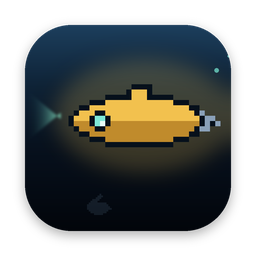
Look for the little yellow submarine in the top right.
Requires macOS 13 or later on Apple silicon, and at least one of Claude Code, Codex CLI, Cursor or the Pi agent. Your existing history counts from day one — at a sixth of the rate of a day you actually play, so arriving with a year of history does not mean arriving finished.
macOS will ask permission the first time a species surfaces. Allow it, or the discoveries happen silently.